


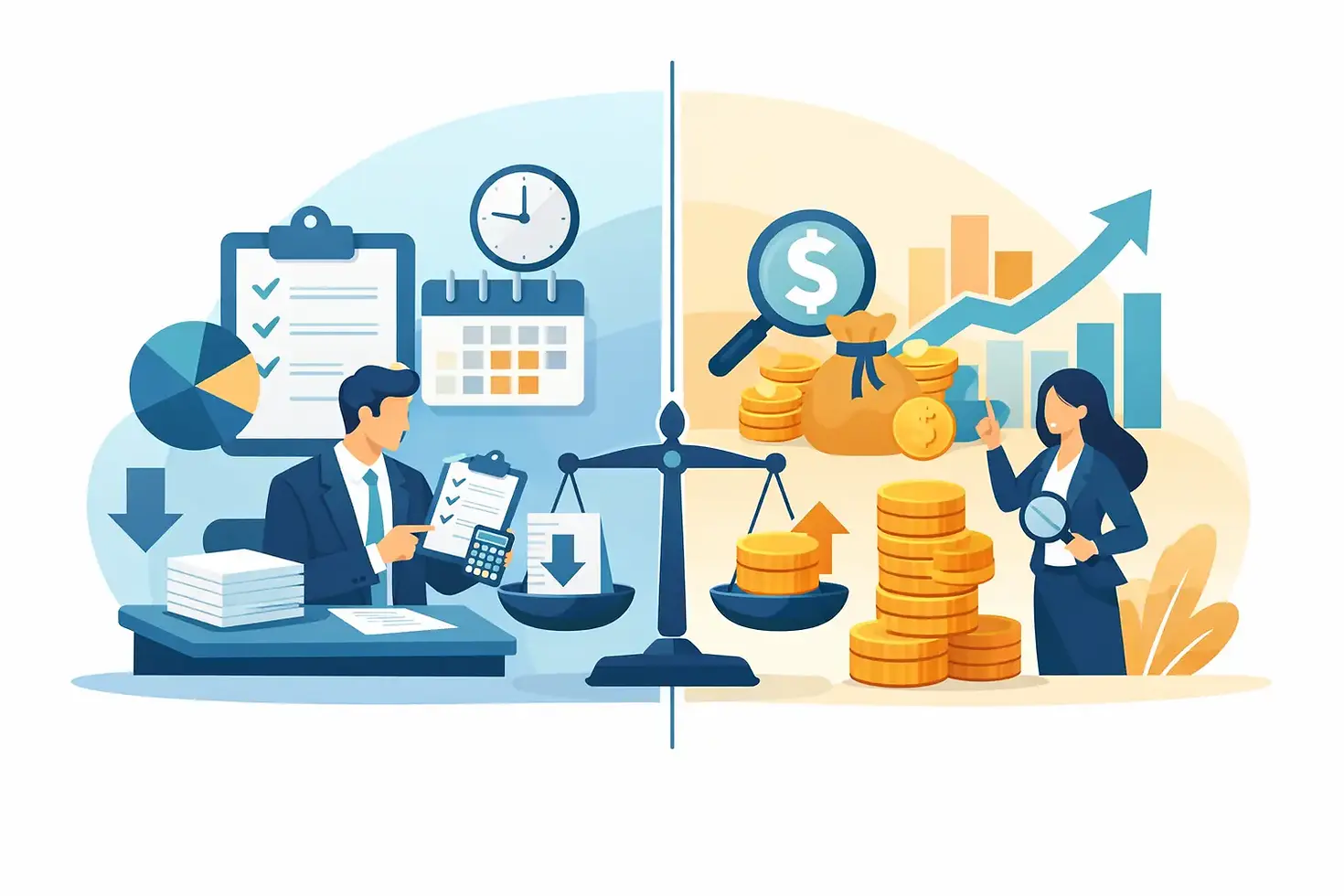
Tax Planning vs Tax Optimization Explained

If your accountant talks about lowering your tax bill, improving timing, and staying audit-ready, you may hear two phrases that sound interchangeable: tax planning vs tax optimization. For small business owners, they are related, but they are not the same. That distinction matters because one keeps you prepared, while the other helps you make sharper financial decisions throughout the year.
A lot of business owners think taxes happen at filing time. In practice, your tax outcome is shaped months earlier by how you pay yourself, when you buy equipment, how clean your books are, whether payroll is set up correctly, and how consistently you track deductions. When those decisions are intentional, taxes become part of business strategy rather than a last-minute scramble.
What tax planning really means
Tax planning is the process of legally arranging your financial activity to reduce tax liability and stay compliant. It usually looks ahead to the current year and the next one. A CPA reviews your income, expenses, entity structure, payroll, estimated payments, and upcoming business changes, then recommends actions that fit your situation.
For a small business, tax planning often includes decisions like whether to accelerate expenses before year-end, how much to set aside for quarterly taxes, whether an S corporation election makes sense, or how owner compensation should be handled. It is proactive, but it is still grounded in known rules, deadlines, and reporting obligations.
That compliance piece is important. Good tax planning is not just about paying less. It is about paying the right amount, on time, with documentation that supports your position if the IRS ever asks questions. In other words, tax planning is strategy with guardrails.
What tax optimization means in practice
Tax optimization is broader. It focuses on structuring financial decisions in a way that improves your overall tax position over time. That can include tax planning, but it usually goes further by connecting taxes to operations, cash flow, growth, and long-term goals.
If tax planning asks, “What should we do before year-end?” tax optimization asks, “How should this business be set up and operated so taxes are managed efficiently all year?” It looks at systems, decision timing, compensation methods, retirement contributions, benefit structures, and even how bookkeeping workflows affect tax visibility.
For example, a business may be technically compliant and still not optimized. Maybe the owner is taking draws in a way that creates cash flow problems. Maybe expenses are categorized too loosely to identify deductible trends. Maybe payroll is functional, but not aligned with the most tax-efficient compensation strategy. Optimization addresses those gaps.
Tax planning vs tax optimization: the key difference
The simplest way to understand tax planning vs tax optimization is this: tax planning is a defined strategic process, while tax optimization is an ongoing operating mindset.
Tax planning usually happens at specific intervals, often quarterly and near year-end. It is tied to projections, deductions, credits, and estimated liability. Tax optimization is more continuous. It influences how you organize records, choose systems, structure transactions, and make business decisions before they create tax consequences.
That does not mean one is better than the other. Most small businesses need both. Planning without optimization can become reactive and narrow. Optimization without planning can become vague and poorly executed. The strongest approach is to use planning sessions to make specific moves and use optimization to build better financial habits around those moves.
Why small businesses often confuse the two
The confusion is understandable because both concepts aim to reduce unnecessary taxes. The difference is mostly in scope.
Many entrepreneurs first seek help because tax season felt painful. They want a lower bill next year, fewer surprises, and clearer answers. That usually starts with tax planning. Then, once the books are cleaned up and the business has better reporting, deeper opportunities appear. At that point, the conversation shifts toward optimization.
This is especially common in growing businesses. A sole proprietor with simple operations may need straightforward planning first. But once revenue grows, payroll expands, or multiple income streams develop, optimization becomes more valuable because tax efficiency depends on systems, timing, and structure, not just deductions.
Where tax planning creates immediate value
Tax planning is often the fastest way to improve outcomes because it focuses on actions you can take now. If your business is profitable, planning can help you avoid underpayment penalties, estimate cash needs, and capture deductions before deadlines pass.
It also helps reduce decision fatigue. Instead of guessing whether to buy equipment this quarter, make retirement contributions, or change your entity election, you are making those calls with financial data and tax projections in front of you.
For many small business owners, that clarity is just as valuable as the tax savings. You can budget better, set pricing more confidently, and stop treating taxes like a moving target. When planning is done well, it supports both compliance and day-to-day decision-making.
Where tax optimization creates longer-term value
Optimization becomes more important when the business is stable enough to improve its financial structure, not just react to tax deadlines. This is where better bookkeeping, payroll design, owner compensation strategy, and entity structure start working together.
Take a business with inconsistent records. Even if it has a strong preparer, the tax return may reflect missed opportunities simply because the data is incomplete or unclear. Optimization fixes the source problem. Better records lead to better reporting, which leads to better planning, which leads to better tax outcomes.
The same applies to business growth. If you are hiring, expanding locations, adding contractors, or changing how owners are paid, the tax effect is not isolated to one return. It touches payroll taxes, deductible expenses, estimated payments, benefits, and state compliance. Optimization helps you build a model that holds up as the business evolves.
The trade-offs business owners should understand
There is a reason every business is not fully tax-optimized. It takes more than a once-a-year conversation.
Planning is often easier to start because it can be tied to a meeting, a forecast, and a short list of recommendations. Optimization usually requires cleaner books, more frequent review, and stronger coordination between accounting, payroll, and tax strategy. That means more discipline and, in some cases, more advisory support.
There are also times when the most tax-efficient move is not the best business move. A large purchase might create a deduction, but if it strains cash flow, the tax benefit may not justify the pressure on operations. A different entity election may lower taxes, but increase administrative complexity. This is where CPA-level guidance matters. The goal is not to chase every possible deduction. The goal is to improve after-tax results without creating avoidable risk or disruption.
How to tell what your business needs right now
If you are behind on bookkeeping, unsure about quarterly payments, or regularly surprised by your tax bill, start with tax planning. You need visibility and control before optimization can work.
If your books are current, revenue is growing, and you are making decisions about payroll, expansion, or owner compensation, it may be time to think beyond planning alone. That is usually the point where tax optimization becomes useful because the bigger savings often come from structure, not just timing.
A good advisor will not force a buzzword onto the wrong situation. They will look at your entity, records, payroll setup, profit trends, and compliance exposure, then recommend the right level of support. Sometimes that means a focused tax plan. Sometimes it means building a more integrated accounting and tax strategy.
What a stronger tax strategy looks like
The best results usually come from treating taxes as part of financial management, not a separate annual task. That means books that are current, payroll that is configured correctly, estimated payments based on real numbers, and periodic review before major decisions are made.
For small business owners, this is where the right advisory relationship changes the experience. Instead of reacting to notices, deadlines, and surprises, you start operating with clearer expectations. That shift can improve cash flow, reduce stress, and make growth decisions easier to evaluate.
At Nexus Accounting and Tax Solutions, that is the practical value of bringing tax strategy into the ongoing life of the business. When planning and optimization work together, taxes become less of a disruption and more of a managed part of running a healthy company.
If you are wondering whether your current approach is enough, that question alone is worth paying attention to. The businesses that stay organized, compliant, and financially confident are usually the ones that stop asking what happens at filing time and start asking what should happen all year.


Comments